Why Ceilings Sag and What to Do About It
A sagging ceiling is not just an eyesore. It can be a sign that something structural has shifted, that moisture has done damage, or that the fixings holding your plasterboard in place have simply given up after decades of work. Understanding what is happening above your head helps you make a faster, smarter decision about what to do next.
This post covers the most common causes, the warning signs that should prompt urgent action, and how to decide between repair and replacement.
Common Causes of a Sagging Plasterboard Ceiling
Age and Failing Adhesive
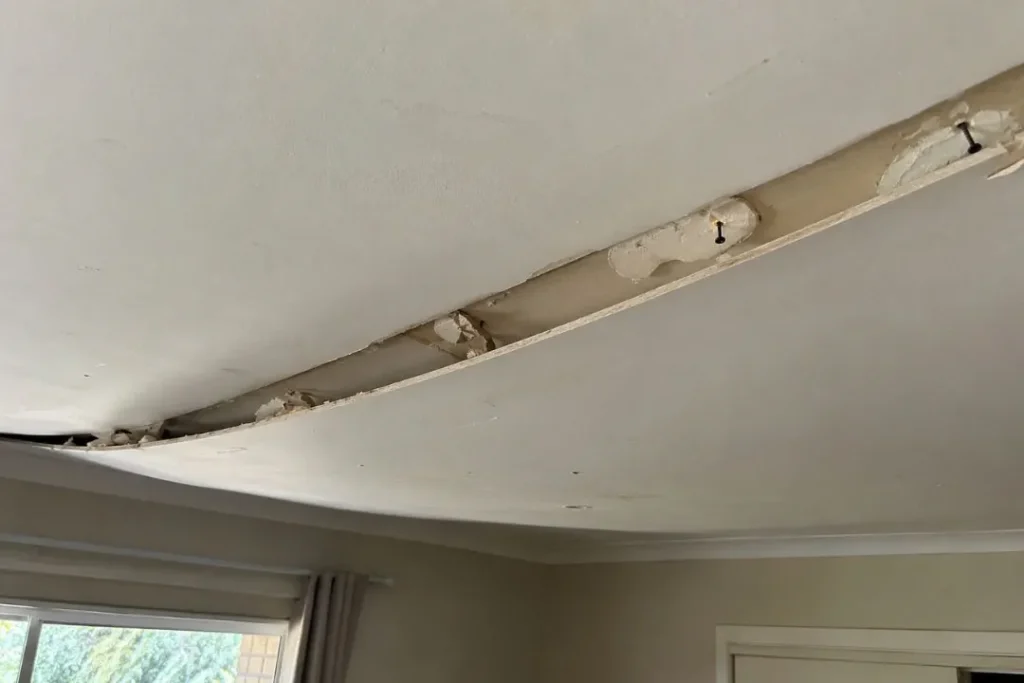
Older homes were often built with plasterboard fixed using adhesive dabs rather than screws alone. Over time, that adhesive dries out, loses its grip, and the sheets begin to pull away from the joists. The result is a ceiling sagging between joists, sometimes across a wide section of a room.
Post-war housing in particular is prone to this. The materials were good for their time, but they were never designed to last indefinitely without maintenance.
Moisture and Water Damage
A leaking roof, a burst pipe, or even condensation building up in a poorly ventilated roof space can saturate plasterboard. Wet plasterboard loses rigidity quickly and begins to bow under its own weight. If the source of moisture is not fixed first, any ceiling repair will fail again.
Insulation Weight
Bulk insulation added to a roof space after the original build can place more load on ceiling sheets than they were designed to carry. This is especially common where insulation has been pushed down between joists rather than sitting above them, adding direct pressure to the plasterboard face.
Structural Movement
Toowoomba’s reactive clay soils cause homes to move with seasonal moisture changes. That movement can shift ceiling joists, crack plasterboard, and pull fixings loose over time. A ceiling that looks fine in winter may show visible sag by the end of a dry summer.
Ceiling Collapse Warning Signs
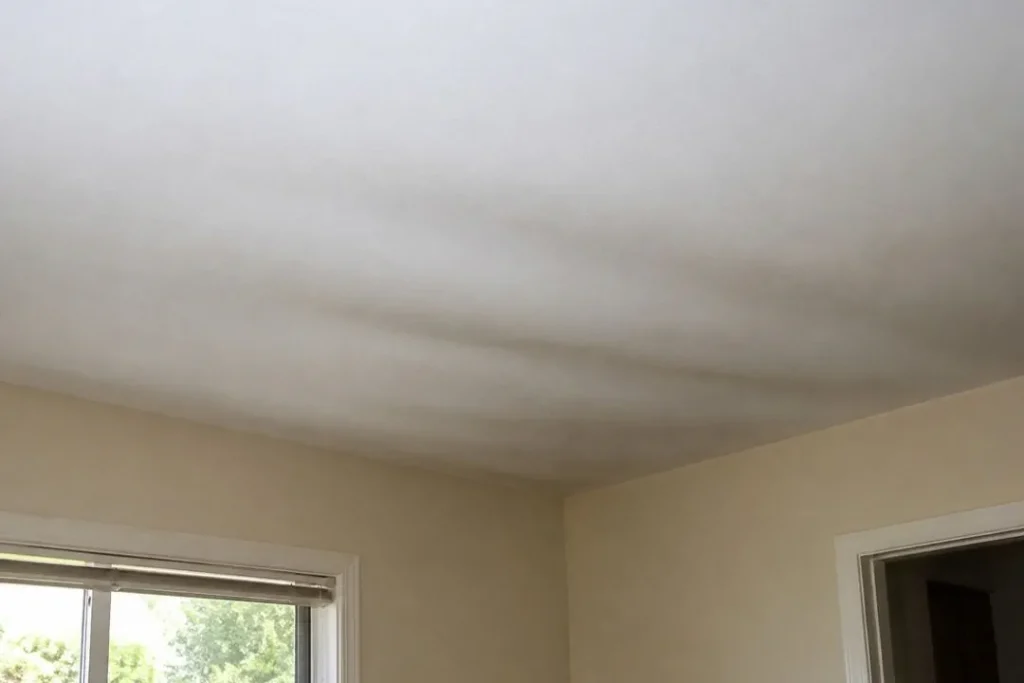
Some signs are easy to dismiss as cosmetic. Others are serious enough to act on immediately. Knowing the difference matters.
Warning signs that a ceiling is under stress include visible sagging or bowing in sheets, cracks running in a line across the ceiling (often following nail or screw positions), popping nails or screws pushing through the surface, and a cornice that has separated from the wall or ceiling. Creaking or cracking sounds when the ceiling moves, even slightly, are also a red flag.
Visible sagging, cornice separation and nail pops in a line are all recognised warning signs of a stressed ceiling. These symptoms can indicate that the plasterboard is losing its connection to the framing and should be assessed by a professional without delay.
If you notice more than one of these signs together, do not wait. A ceiling that fails does so without warning, and the weight of even a single sheet of plasterboard is significant.
Repair or Replace: How to Decide
Not every sagging ceiling needs to come down. The right call depends on how much of the ceiling is affected, what caused the sag, and the condition of the existing plasterboard.
When Repair Is the Right Option
If the sag is limited to one area, the plasterboard is otherwise sound, and the cause has been fixed (such as a repaired roof leak), re-fixing the sheets with screws and backing the repair with a batten or additional fixing points is often enough. A plasterer can re-secure loose sheets, fill and sand the surface, and leave the ceiling looking as though nothing happened.
Localised sagging ceiling repairs like this are straightforward when the damage is caught early.
When Replacement Makes More Sense
If the plasterboard is water-damaged, crumbling, or sagging across most of the room, replacement is the more practical and cost-effective path. Trying to patch a ceiling that has widespread adhesive failure or significant moisture damage usually means the problem returns within a few years.
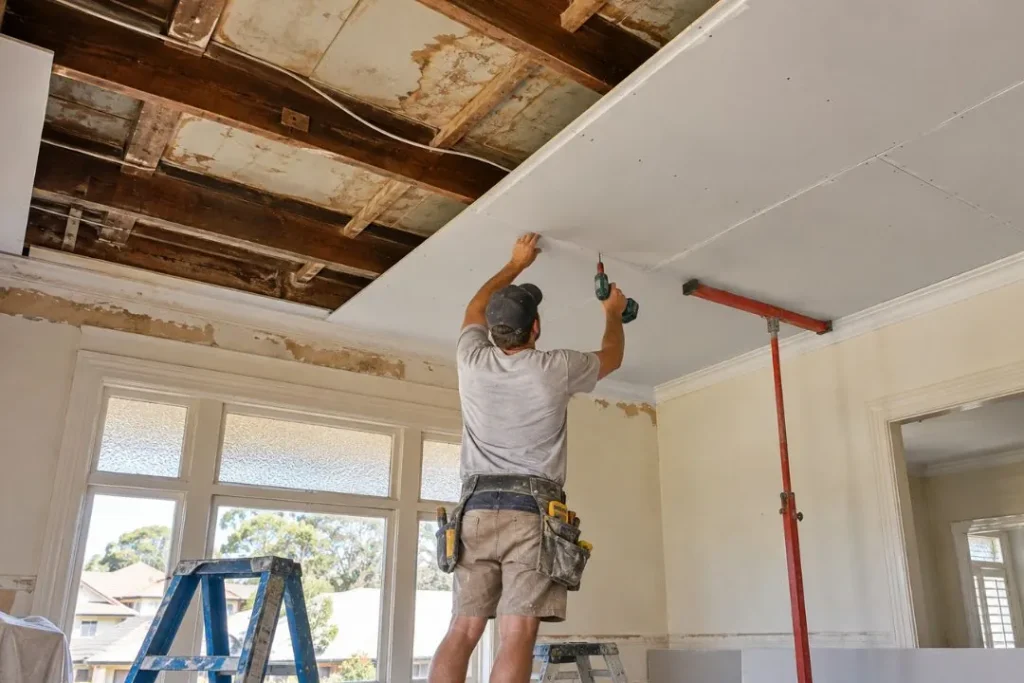
When new plasterboard goes back up, the product matters. Ceiling-specific plasterboard such as Gyprock Supaceil is engineered to stay flatter on 600mm joist centres and hold up under the weight of insulation, which makes it a better choice than standard wall board for overhead installation.
What to Do Before a Plasterer Arrives
If you have a visibly sagging ceiling, keep the room clear of furniture and people until it has been assessed. Do not attempt to push the ceiling back up from below or add temporary supports without knowing what is causing the sag.
Take a few photos from different angles so the plasterer can see the extent of the problem before arriving. Note whether the sag appeared suddenly or has been developing over time, and whether you have had any roof leaks or plumbing issues recently. That information helps narrow down the cause quickly.
Get a Straight Answer on Your Ceiling
From Newtown to Harristown and right across Toowoomba, Our team can check a sagging ceiling and tell you whether it can be re-fixed or needs replacing. For a plasterer Toowoomba locals rely on for honest advice and quality ceiling work, call (07) 3060 8553 or get in touch online to arrange your free quote.